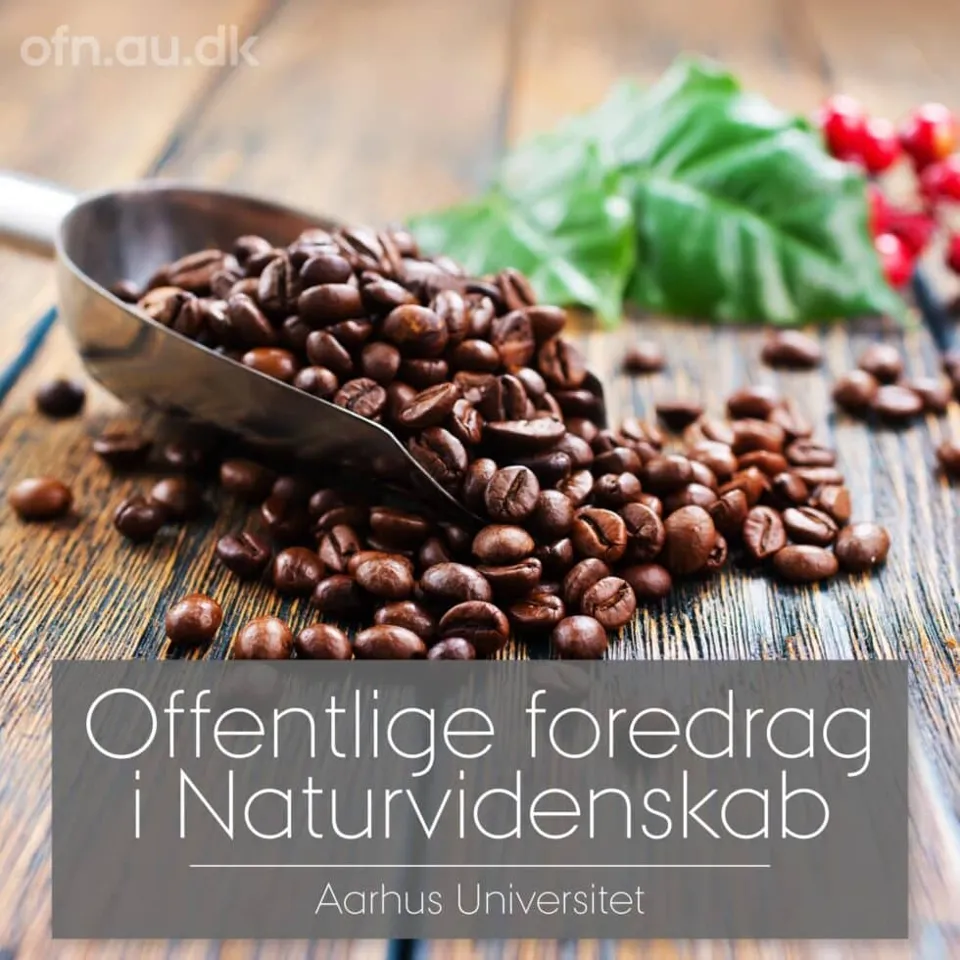
About
Lecture about coffee with three researchers. 3 November 2026 from 18:45 to 21:00 in BHJ Salen, Biblioteket Gråsten, Ahlefeldvej 4, Gråsten. Drop-in, free entry. Coffee served.
About the lecturer
Three researchers: Anders Barfod (botanist), Aske Skovmand Bosselmann (natural resource economist) and Kjeld Hermansen (diabetes and nutrition researcher).
Background
The lecture is part of the series “Public Lectures in Natural Science”, live-streamed from Aarhus University. It covers the coffee plant’s botany, sustainable coffee production, climate change impacts and the health aspects of coffee consumption. You can ask questions during the lecture by sending an SMS or a tweet. The lecture also places our use of coffee in a historical perspective. The very development in Danes’ consumption patterns of coffee, from when it was introduced in Denmark in 1665 to now, has indeed been remarkable. Diabetes and nutrition researcher Kjeld Hermansen will challenge the many claims about how coffee affects the body. One often hears statements such as: “One should be careful not to drink too much coffee”, “Coffee is unhealthy and can cause cancer and cardiovascular diseases” and “Coffee can shorten life”. The question is whether this is myth or fact? Kjeld Hermansen will review how coffee affects mortality and the major diseases cancer, cardiovascular diseases, neuropsychiatric diseases and type 2 diabetes. And you will gain insight into his research group’s work to shed light on the mechanisms of action of coffee on the risk of developing type 2 diabetes. Botanist Anders Barfod, who has researched tropical plant resources for more than four decades, will give a broad introduction to the coffee plant’s botany – including the latest exploration of its wild relatives. The Coffea genus illustrates excellently the great importance of agrobiodiversity for agricultural production in a world in constant change. You will also hear what the coffee bean actually consists of in the fruit and gain insight into how one goes from the harvest-ready fruit on the coffee bush to the steaming cup of coffee that many of us enjoy every day. Millions of farmers in the so-called ‘coffee belt’ around the Equator produce enough coffee for us, worldwide, to enjoy 30,000 cups per second. This requires a large area, and historically coffee cultivation has led to deforestation and loss of biodiversity, but under certain conditions coffee cultivation today has a completely different role. Natural resource economist Aske Skovmand Bosselmann will talk about coffee cultivation and how farmers around the world not only produce coffee beans, but also ecosystem services that we can all benefit from – including in relation to climate change, which is a central topic in sustainable coffee today. You will also gain insight into the latest research that will ensure we can continue to drink coffee in a changed climate.
Why take part?
For anyone interested in coffee, its biology, cultivation, health effects and sustainability. The organisers invite everyone to come and learn more about this globally important crop. The level is high, and you will be challenged, but you can benefit from all lectures regardless of your prior knowledge. Admission is free to all lectures.
Help improve this page
Photos and corrections are looked at before they appear.